Stop rebuilding the same document from scratch every time.
Turn the boilerplate, signature blocks, certificates of service, and standard clauses you retype every week into one-click building blocks —
using features Word already has.
You know the routine. A new matter comes in, and the first thing you do is open File Explorer and start hunting through the network drive for “the last good one” — the most recent example of whatever you’re about to draft. You copy it. You strip out the old client name, the old dates, the old case number. You patch in the new ones. You hope you caught everything before it goes out.
It works. Sort of. Until you miss something.
This is how a stunning amount of legal document production still happens in 2026 — by red-pen markup of the last example, the same way we did it in 1995. And it’s costing you hours every single week.
Is this you?
- Your first move on any new document is finding “the last one we did like this” and copying it
- You retype the same certificate of service, signature block, or notary jurat over and over because finding the prior one is somehow harder than just typing it again
- Every time you use Word’s paragraph numbering, you’re fighting with it — and you’ve started using manually typed numbers just to avoid the headache
- When the attorney moves Section 4 above Section 2, you spend the next twenty minutes hunting down every “see Section 4” reference and renumbering by hand
- You’ve heard about Quick Parts or AutoText but never quite figured out where to start
- You suspect there’s a faster way to do all this, but nobody at the firm has time to show you
If any of that sounds familiar — keep reading. This course was built for you.
The “find the last one and mark it up” workflow has to go.
Here’s the uncomfortable truth: your firm is asking you to do more work, with fewer people, on tighter deadlines. And the way most of us still produce documents — hunting for prior examples, marking them up, retyping the variable bits — was barely efficient when the firm had a full secretarial pool. It’s now actively in the way.
The good news? You don’t need a $40,000 document assembly platform to fix this. You don’t need IT approval. You don’t need a vendor demo, a procurement process, or a six-month rollout.

Microsoft Word already has the tools. They’ve been sitting there the whole time. Nobody just bothered to show you how to use them.
What you’ll actually learn (and use the same day)
Assemble Documents Faster takes the building-block features Word ships with — Quick Parts, AutoText, AutoCorrect, automatic paragraph numbering, cross-references, bookmarks, and templates — and shows you exactly how to put them to work on the documents you produce every week.
This isn’t about overengineering. It’s not about turning your office into a document automation lab. It’s about taking the *small, repeatable wins* that compound across hundreds of documents a year:
- The certificate of service that inserts itself with one click — and updates the date automatically
- The standard signature block, notary jurat, or boilerplate clause you can drop in by typing three letters
- The discovery objections, definitions, and instructions that live in a single library you can pull from any document
- The numbered paragraph scheme that *finally* behaves itself — and renumbers cleanly when the attorney rearranges sections
- The cross-references that update themselves when “Section 3.14” becomes “Section 3.15”
- The template for that particular document type you produce twice a week, built once and reused forever
Don’t take my word for it
I work for an equipment leasing company and support our legal/documentation department. Thanks to you, my Word skills have significantly improved and saved me a LOT of time and frustration. I now use Auto Text for Company name, address, and managers’ names and will be on the lookout for more!
Michelle
I am so glad that I took the time to watch this video. I will use Quick Parts for: Certificates of Service, Subpoenas, Deferred Prosecution Agreements, Notary inserts, Rule 803 notifications, standard cover letters, and on and on. I am so grateful to learn this valuable tool. Thank you.
Diane
Thank you!!! Fifteen minutes to learn a new skill that will save me hours. I cannot tell you how much I appreciate you doing all the work and picking out the jewels of wisdom. I am always digging through looking through old docs notary jurat, not anymore! Looking forward to the rest of the series.
tammy
Thank you for the great video. Immediately useful for discovery objections; discovery definitions; discovery instructions; standard interrogatories and document requests. Also for inserting standard language in commonly utilized fee agreements.
Michael
The reason these techniques are so immediately useful? They’re all native Word features. Nothing to install, nothing to license, nothing to ask IT for. Even if you have zero say in your firm’s software decisions, you can be using every one of these techniques by the end of the day.
Here’s what we’ll cover in the course
Fourteen modules, 31 lessons, about 3 hours and 20 minutes of focused video instruction (Windows and Mac).
The art of document [dis]assembly — How to look at a document you produce regularly and identify which parts are reusable, which parts are variable, and where automation will pay off the most. (Spoiler: you don’t have to automate everything to get serious time back.)
Quick Parts — The single most useful feature in Word that almost nobody uses. Save reusable text, formatted clauses, even self-updating dated content. Plus the different Building Block galleries (headers, footers, watermarks, cover pages) and how to edit existing Quick Parts when the boilerplate changes.
AutoText & AutoCorrect — Two features that look almost identical but work very differently. You’ll learn when to reach for which one — including the right tool for inserting symbols like ¶ and § or formatted text like *id.*
Paragraph Numbering — Eight lessons on the feature most people give up on. We cover every numbering scenario you’ll actually run into in legal documents, plus how to diagnose and fix the most common paragraph numbering disasters.
Cross-Referencing — Pair automatic numbering with cross-references and “see Section 3.14” updates itself when Section 3.14 becomes Section 3.15. No more hunting and replacing.
Bookmarks — Drop a bookmark at any point in your document and reference it later by page number, paragraph number, or heading. A small feature that quietly saves a lot of editing time.
Repeatable elements — Type the client’s name once and have it appear (correctly formatted) everywhere it’s needed in the document. There’s more than one way to do this, and at least one of them will fit your workflow.
Templates — Once you’ve built your Quick Parts library, mastered numbering, and figured out cross-references, you can combine all of it into templates for the document types you produce most often. Build it once. Use it forever.
Your Instructor

I’m Deborah Savadra, and I’ve spent 30 years in the legal industry as a legal assistant, paralegal, and software trainer. I’ve drafted thousands of legal documents myself, and I’ve sat down at dozens of co-workers’ desks to fix the same Word problems you’re probably wrestling with right now.
I’ve also lived through every staffing crunch, every “do more with less” memo, and every round of layoffs that left the rest of us buried under the workload. When the firm went from three secretaries to one, the math only worked because I’d already built the building blocks. The techniques in this course are the same ones I use every day to keep up with a workload that, on paper, shouldn’t be possible.
I want to hand them to you.
Is this course right for you?
No course is for everyone. Here’s who’ll get the most out of *Assemble Documents Faster* — and who shouldn’t bother.
This course is right for you if:
- You produce a lot of documents that resemble each other, and your current process starts with “find the last good one”
- You routinely retype certificates of service, signature blocks, notary jurats, or other boilerplate because finding the prior version takes longer than retyping it
- Your certificate of service dates are constantly out of sync because you forgot to update them
- You’ve tried Word’s automatic paragraph numbering and given up — or you’re white-knuckling it every time
- When paragraphs get rearranged, you spend an hour manually renumbering and updating cross-references
- You want to stop reinventing the same wheel every Tuesday
This course is not right for you if:
- You’re new to Word and not yet comfortable with basic document creation, editing, and formatting
- You’re already fluent with Quick Parts, AutoText, automatic numbering, fields, bookmarks, cross-references, and templates
- You’re writing macros or VBA and looking for advanced automation
- You’re an IT pro looking for instruction on document controls or .dotm files
- You’re shopping for an enterprise-wide document templating platform for a multi-office firm
- You’re a billable employee unwilling to spend potentially billable time learning new skills
Stop hunting for the last good signature block
Assemble Documents Faster hands you the building blocks (literally) to stop reinventing your own work. The features are already in Word. The legal-specific examples are in the course. The hours you’ll get back are yours to keep.
What’s in the course at a glance
- Quick Parts — saving reusable text, clauses, and formatted content
- Quick Parts vs. AutoText — when to use one versus the other
- Reusable headers, footers, and watermarks built once and dropped in anywhere
- Auto-updating dates in Quick Parts (so your certificate of service is never wrong again)
- Automatic paragraph numbering for discovery, affirmative defenses, and complex headings
- Bookmarks and cross-references that update themselves when sections move
- ASK and FILL-IN fields for templates that prompt you for the variable info
- Building your own time-saving templates for the document types you produce most
- Downloadable exercise files for the paragraph numbering lessons
- Both video and text/illustrated instructions
- Windows and Mac instructions throughout
Frequently Asked Questions
During checkout, you’ll provide your email and choose your own user ID and password. (Already enrolled in another one of my courses? Log in first so everything stays under one account.) Your purchase receipt arrives by email immediately and includes a link to the first lesson, plus detailed login instructions. The same link appears on the confirmation page after payment.
You’ll also get a series of follow-up emails that walk you through the course, with login instructions at the bottom of each one.
Go to https://legalofficeguru/login and use the login form:
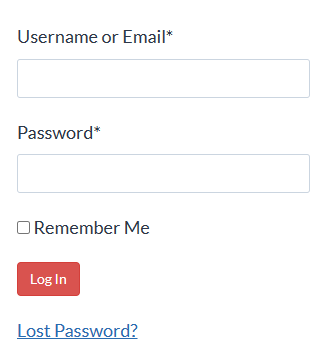
There’s also a Course Login button in the top menu on every page of my site:

Click here to see a 2-minute video tour of the lesson interface.
Email me your question at info@legalofficeguru.com — I’ll get back to you as quickly as I can.
The next document on your desk is one you’ve drafted a version of a hundred times before. You can find the last one and mark it up again — or you can spend a couple of focused hours learning to build it once and stop redoing the work.